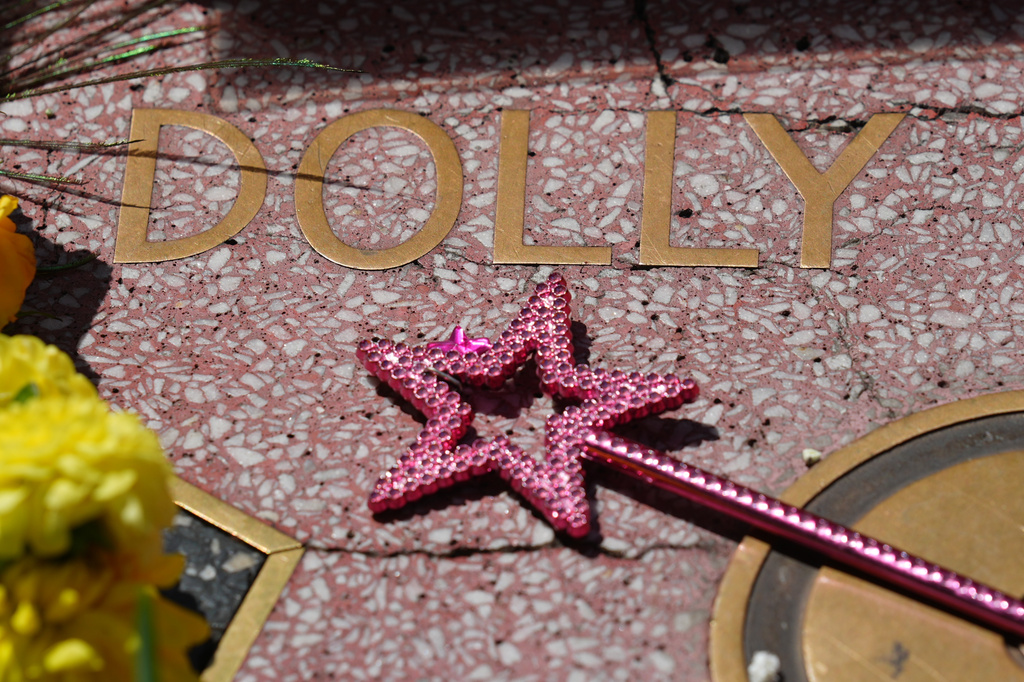
There are country stars.
There are legends.
And then there was Dolly Parton.
Dolly Parton died Tuesday, August 25, in Nashville at the age of 80 following what her representatives described as a brief battle with cancer.
Trying to summarize her career almost feels ridiculous.
Where do you start?
“Jolene?”
“Coat of Many Colors?”
“9 to 5?”
“I Will Always Love You?”
Dollywood?
Steel Magnolias?
The Imagination Library?
Maybe the better answer is this:
Dolly Parton somehow became bigger than all of them.
She grew up as one of 12 children in a poor family in the mountains of East Tennessee and eventually became one of the most recognizable entertainers on Earth.
Along the way, she sold more than 100 million records, wrote thousands of songs, won 11 Grammys and earned induction into the Country Music Hall of Fame, Songwriters Hall of Fame and Rock & Roll Hall of Fame.
But the numbers don’t really explain Dolly.
The songs do.
“Coat of Many Colors” turned a childhood experience of poverty into a song about dignity.
“Jolene” took jealousy and insecurity and made them universal.
And “I Will Always Love You” might be one of the greatest examples of Dolly’s songwriting genius.
She originally wrote it as a goodbye to Porter Wagoner when she decided to leave his television show and pursue her solo career.
Then Whitney Houston recorded it nearly two decades later and turned Dolly’s country ballad into one of the biggest pop recordings in history.
Dolly owned the publishing.
That worked out pretty well.
But music was only one part of an extraordinary life.
Dolly became a movie star with 9 to 5, The Best Little Whorehouse in Texas and Steel Magnolias.
She created Dollywood and turned it into one of America’s most successful theme parks.
And then she did something that may ultimately affect more people than any hit record.
In 1995, Dolly created the Imagination Library because her father could not read or write.
The idea was incredibly simple.
Send children free books.
The program began in her home county in Tennessee.
It eventually expanded across the United States and into four other countries, delivering millions of books every month to children from birth to age five.
Dolly also gave money to hospitals, wildfire victims, medical research and countless other causes—often without making much noise about it.
That’s part of what made her unusual.
She could walk onstage wearing rhinestones, enormous hair and six-inch heels and be completely impossible to ignore.
Then she’d quietly do something enormously generous when nobody was looking.
Her husband, Carl Dean, died in March 2025 after nearly 60 years of marriage. Dolly had spoken openly in recent months about grieving him and dealing with her own health problems.
But she kept working.
Just four days before her death, Dolly said there were still many things she wanted to accomplish.
That may be the most Dolly Parton thing imaginable.
Eighty years old.
One of the most successful entertainers who ever lived.
Still making plans.
Country music lost one of its greatest songwriters Tuesday.
Nashville lost one of its greatest ambassadors.
And millions of people who never met her somehow feel like they lost somebody they knew.
That’s a pretty remarkable legacy for a little girl from the mountains of East Tennessee.
Dolly Parton: January 19, 1946 – August 25, 2026.